12 Best Physician Finance Books (2026)
Build wealth on a doctor's salary. The 10 best personal finance books for physicians in 2026, covering investing, student loans, and contract negotiation.

Medical school teaches you to save lives. It teaches you nothing about saving money. The average physician graduates with $285,000 in student debt, a 7-year income gap, and zero formal training in personal finance, investing, taxes, or insurance. The financial decisions made in the first 5 years of attending practice — student loan strategy, disability insurance timing, home purchase, retirement account setup — will determine whether a physician retires wealthy or discovers at 62 that 30 years of a six-figure income produced a net worth that does not support early retirement. One good book, read at the right time, is worth $2,000,000 over a physician's career. That is not hyperbole — it is the compound math of getting these decisions right versus getting them wrong.
The physician finance book market has exploded over the past decade. When Dr. Jim Dahle published the first White Coat Investor book in 2014, physician-specific financial literature barely existed. Today there are dozens of books written by physicians for physicians — ranging from the genuinely transformative to the mediocre. Most physicians do not have time to read all of them. Most residents do not have time to read any of them.
This guide does the work for you. Every book reviewed below was read in full, evaluated for physician-specific accuracy, and assessed for what career stage it is most useful at. The list is divided into three categories: physician-specific books that every doctor should read, essential investing books written by or for physicians, and specialty books for specific financial situations. Amazon ratings and page counts are included for every book. The honest caveats are the sections most other review lists skip.
Category 1: Physician-Specific Books — The Must-Reads
These books were written by physicians for physicians and address the financial variables that no general personal finance book covers: the late income start, the medical school debt, the PSLF decision, the disability insurance GSI window, the physician mortgage, and the non-compete clause.
Author
James M. Dahle, MD
Amazon Rating
4.8/5 (2,000+ reviews)
Pages
160

This is the book. If a physician reads one finance book in their life, this is the one. The White Coat Investor is a high-yield manual that specifically deals with the financial issues facing medical students, residents, physicians, dentists, and similar high-income professionals. Dr. Dahle wrote it after becoming disillusioned with the way he was treated by financial professionals who took advantage of a physician's income and financial ignorance — and his experience radiates through every page.
The book covers student loan strategy, disability insurance, physician mortgages, index fund investing, retirement accounts (401k, 403b, backdoor Roth), tax basics, and the asset protection fundamentals that general personal finance books never touch. It does this in 160 pages — readable in a single long flight or three evenings on call.
Dr. James M. Dahle, MD, FACEP, FAAEM is a practicing emergency physician and the founder of The White Coat Investor, now the most widely read physician-specific personal finance and investing website in the world.
The honest caveat: The book was first published in 2014 and has been updated but is not a 2026 document. Some specific financial figures — contribution limits, tax thresholds, student loan program details — have changed. Read the book for the framework and principles; verify the specific numbers through current sources including the guides on this site.
Bottom line: The entry point to physician financial literacy. Read it in residency, ideally PGY-1. Jim Dahle has done for physician financial illiteracy what penicillin did for neurosyphilis. Buy it, read it this month, then come back to the other books on this list.
Author
James M. Dahle, MD
Amazon Rating
4.7/5
Pages
282
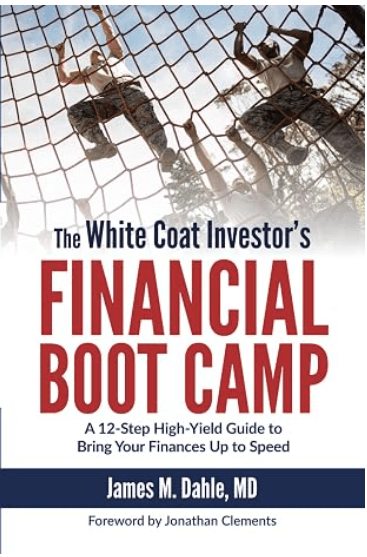
Where the first White Coat Investor book is the primer, Financial Boot Camp is the curriculum. Structured as 12 sequential steps — from calculating your net worth to protecting your assets and planning your estate — the book walks through every major financial decision in the correct order, with physician-specific examples throughout.
What makes Boot Camp more valuable than the first book for established attendings is the depth it adds to the framework: the book brings in CFP professionals to explain specific concepts, includes real physician case studies showing how these decisions played out in practice, and addresses the full lifecycle of physician finance from first attending paycheck to retirement.
The honest caveat: At 282 pages, Boot Camp requires more commitment than the first WCI book. The 12-step sequential structure works well for physicians who can work through it chapter by chapter but feels less useful as a reference document for physicians who want to look up a specific topic.
Bottom line: The follow-up that most physicians need within the first year or two of attending practice when the first book's framework needs to be applied to a specific financial situation. If the first WCI book is the preclinical curriculum, Boot Camp is the clinical clerkship.
Author
James D. Turner, MD
Amazon Rating
4.9/5
Pages
198
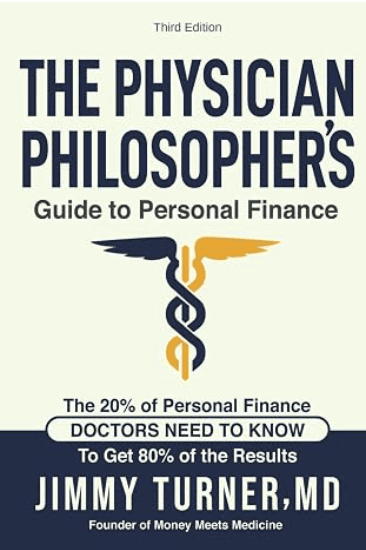
Dr. Jim Turner, an anesthesiologist and founder of The Physician Philosopher blog, wrote this book with a Pareto principle philosophy: most of physician financial success comes from getting a small number of decisions right. The book identifies those decisions and explains them with the clarity of a physician who has actually lived the financial journey from resident debt to attending financial independence.
The foreword — written by Dr. Jim Dahle — includes this assessment: "I have frequently told physicians and dentists that the first really good personal finance and investing book you ever read is likely to be worth $2 million to you over the course of your life. This is a $2 million book."
The book earned a 4.9-star average on Amazon — the highest rating of any physician-specific finance book on this list. The brevity and focus are what physicians who are working 50 to 60 hours per week need: not everything, but the most important things, in the right order.
The honest caveat: The Pareto principle cuts both ways. The book is deliberately not comprehensive. Physicians who need deep guidance on PSLF, practice purchase financing, PE transaction evaluation, or complex estate planning will find that the 20 percent covered in this book does not include those topics.
Bottom line: The physician finance book for the physician who does not have time to read physician finance books. If you are a PGY-3 who has not yet opened a financial book, start here. You can finish it over a weekend call shift and it will be worth more than every hour of financial advice you've received since medical school.
Author
Jeff Steiner, DO
Amazon Rating
4.0/5
Pages
180

Dr. Jeff Steiner wrote this book in the review book format familiar to any physician who has studied for the USMLE — high-yield boxes, summary tables, and a structure designed for rapid assimilation rather than leisurely reading. Its material on treating student loan debt and moonlighting in residency is particularly excellent, per White Coat Investor's review.
The book is structured in three sections: personal finance basics, residency-specific decisions, and young attending considerations. The residency section is the most physician-specific and most valuable component — covering the IBR enrollment decision, disability insurance GSI timing, and the financial pitfalls of the residency-to-attending transition that most general finance books never acknowledge.
The honest caveat: The review book format that makes this book accessible also limits its depth on any single topic. A resident who reads this book and then needs detailed guidance on, say, PSLF strategy or physician mortgage qualification will need to go deeper elsewhere. Think of it as Step 1 for physician finance — it tells you what exists and why it matters, then you do the dedicated study on the topics that apply to your situation.
Bottom line: The right entry point for medical students and early residents who are encountering these concepts for the first time. The review book format respects the physician's time while covering the essential terrain. Buy it before intern year, read it during MS4, and use it as a reference when the financial decisions it describes actually arrive.
Author
Cory S. Fawcett, MD
Amazon Rating
5.0/5 (60+ reviews)
Pages
170
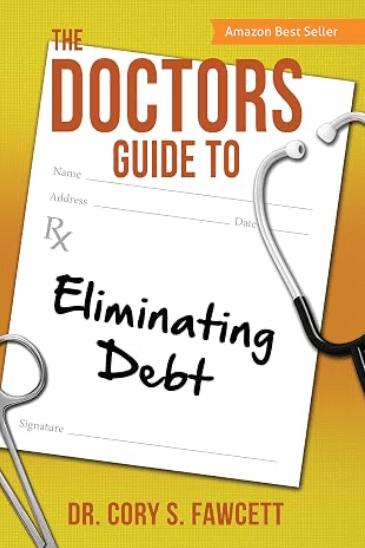
Dr. Cory Fawcett — a retired general surgeon who paid off a $1 million debt load during his career — wrote a series of physician finance books focused on specific financial problems. The Doctor's Guide to Eliminating Debt is the most directly applicable to the debt burden that defines the financial situation of most physician-age Americans.
The book covers debt elimination in four practical steps, explains how to recognize biased financial advice, and makes the compound interest argument for aggressive debt paydown in terms physicians can apply immediately. White Coat Investor's review describes it as "Dave Ramsey for doctors, but without the bad investment advice" — which is an accurate and useful framing. The emotional and behavioral aspects of debt management are addressed alongside the mathematical strategy.
The book's focus on mortgage payoff will be controversial among physicians who follow the mathematical argument for investing over mortgage paydown — but Fawcett's case for the psychological value of eliminating all debt is presented honestly and the counterarguments are acknowledged.
The honest caveat: A 5-star rating with 60+ reviews reflects genuinely satisfied readers. The focus is narrow — this is a debt book, not a comprehensive physician finance book. Physicians whose primary financial challenge is debt management will find it valuable; physicians whose debt is already under control will find it less applicable.
Bottom line: The right book at the right time for the resident who is paralyzed by $300,000 in student loans and needs a practical, motivating framework for thinking about debt elimination. Short, readable, and actionable.
Author
James M. Dahle, MD
Amazon Rating
4.6/5
Pages
306

This is the fourth book in Dr. Dahle's series and the most specialized. It is the only physician finance book that covers asset protection — LLCs, Tenancy by the Entirety, homestead exemptions, umbrella insurance, domestic asset protection trusts — in the depth that physicians actually need, with the most comprehensive list of state-specific asset protection laws ever published in a physician finance book.
As covered in our own Physician Asset Protection guide, physicians face a liability environment unlike any other profession — the highest litigation rate, significant personal liability exposure from both clinical and personal activities, and the financial profile that makes them attractive judgment targets. This book is the practical manual for building the structural protection that most financial advisors either do not know or do not proactively implement for physician clients.
The honest caveat: This book is not for the PGY-2 who has not yet purchased disability insurance. Asset protection planning is Layer 4 and Layer 5 of a protection stack that starts with insurance. Read the first WCI book first, get your insurance in order, then read this one as your net worth grows to levels that make the structural planning worth the legal cost to implement.
Bottom line: Required reading for any physician with a net worth above $1 million or any physician who owns a practice, rental real estate, or other assets that require active protection strategy. Buy it after you have read the first WCI book and have the basics in place.
Category 2: Essential Investing Books for Physicians
These books are not physician-specific — but every physician serious about building wealth should read them. They cover the investing philosophy, behavioral finance, and market principles that determine long-term investment outcomes regardless of income level.
Author
Morgan Housel
Amazon Rating
4.7/5 (100,000+ reviews)
Pages
256
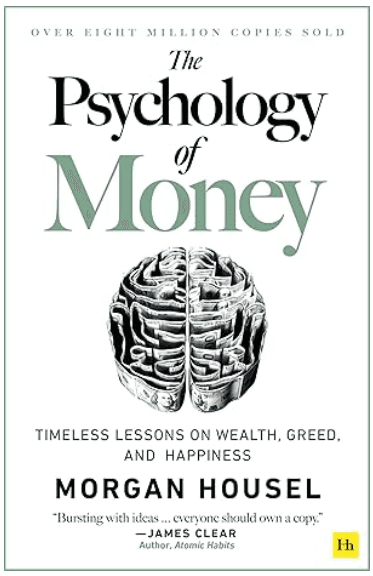
The Psychology of Money is not a physician-specific book and not a book about investment mechanics. It is a book about how humans think about money — and it is the most practically valuable investing book written in the past decade for any high-income professional managing long-term wealth accumulation.
The book's core insight: financial success has less to do with how smart you are and more to do with your behavior — specifically, whether you can maintain a consistent long-term investment strategy through market volatility, lifestyle inflation, and the behavioral biases that cause even intelligent, analytically trained people to make financially irrational decisions with money.
Physicians are not immune to these biases. The physician who sells their index funds in March 2020 when the market drops 34 percent, buys back in after the market has recovered, and repeats this pattern through their career destroys more wealth than the difference between good and bad investment product selection. The Psychology of Money is the book that prevents that physician from being that physician.
The honest caveat: This book will not tell you which index funds to buy, how to set up a backdoor Roth IRA, or how to structure your disability insurance. It is a behavior book, not a mechanics book. You need both — read this alongside a mechanics-focused physician finance book, not instead of one.
Bottom line: The single most recommended book by financially successful physicians when asked what changed their relationship with money. Read it in one sitting. Re-read it before every market correction.
Author
John C. Bogle
Amazon Rating
4.7/5 (5,000+ reviews)
Pages
304
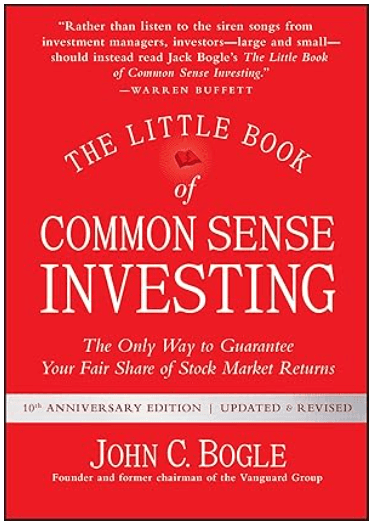
John Bogle invented the index fund and spent 50 years making the case that most investors — including most physicians who trust active fund managers with their retirement savings — would be dramatically better served by simply buying the market and holding it indefinitely. The arithmetic is not close: the average actively managed fund underperforms its benchmark index by approximately 1 to 2 percent annually after fees, and that underperformance compounds into hundreds of thousands of dollars of foregone wealth over a physician's accumulation period.
This book is the clearest, most authoritative case ever made for the approach that MedMoneyGuide recommends in our How Physicians Should Invest Their First $100,000 guide: low-cost, diversified index funds, held consistently through market cycles, without the expense ratios, commissions, and underperformance of actively managed alternatives.
The honest caveat: The book is relatively long for the simplicity of its core argument. Bogle makes the index fund case convincingly in the first 100 pages — the remainder of the book elaborates extensively on a point that most physicians will accept after the first three chapters.
Bottom line: Read this book if you have ever been tempted to let a financial advisor manage your investments in actively managed funds, or if you have ever wondered whether index fund investing is "too simple" to be genuinely effective. It is not too simple. It is correct.
Author
William J. Bernstein, MD
Amazon Rating
4.5/5
Pages
208

William Bernstein is a retired neurologist who became one of the most respected voices in investment theory — and his physician background makes The Investor's Manifesto uniquely suited to a physician audience. He speaks your language. He approaches portfolio construction the way a physician approaches diagnosis: empirically, with attention to evidence quality, acknowledging uncertainty.
The book covers asset allocation, risk tolerance, the history of financial markets, and the behavioral pitfalls that derail even sophisticated investors. Bernstein is particularly good on the emotional management of market volatility — a physician who has trained their clinical decision-making to be unaffected by emotion needs the same discipline applied to their investment portfolio, and Bernstein makes that case with precision.
The honest caveat: This is an investment theory book, not a physician finance book. It does not cover student loans, disability insurance, physician mortgages, or any of the physician-specific financial variables that make the WCI books more immediately applicable to a new attending's situation. Read it after you have the physician-specific basics in place.
Bottom line: The Bogleheads' Guide and The Little Book of Common Sense Investing cover what to invest in. The Investor's Manifesto covers how to think about investing. Both are necessary. This one is particularly worth reading for physicians who find that their analytical training makes them susceptible to overcomplicating the investment process.
Category 3: Specialty Books for Specific Physician Situations
These books address specific financial situations that the general physician finance books cover only briefly. Choose from this category based on what is most relevant to your current financial situation.
Author
Tom Wheelwright, CPA
Amazon Rating
4.7/5 (3,000+ reviews)
Pages
271
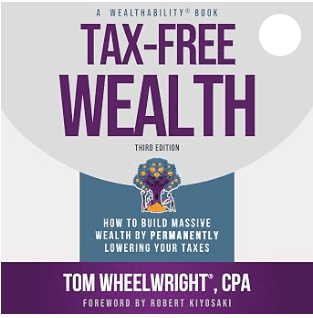
The United States tax code is approximately 6,871 pages long. Most of those pages are not penalties — they are incentives for specific behaviors that Congress has decided to encourage, including real estate investment, retirement savings, business ownership, and charitable giving. Tax-Free Wealth is a manual for finding and using those incentives legally, with the philosophy that the highest-income physicians should pay the lowest legally possible tax rate — not through avoidance, but through code literacy.
For physicians who are practice owners, real estate investors, or locum tenens physicians with significant self-employment income, the tax strategy content in this book is worth multiples of its cover price. The S-Corp election, the Solo 401(k), cost segregation, bonus depreciation, and the real estate professional designation are all covered in practical terms. These are the same strategies discussed in our Locum Tenens Tax guide and Rental Real Estate for Physicians guide — and having the book-length treatment is valuable for physicians who want to understand the full framework.
The honest caveat: Tax-Free Wealth is a general tax strategy book, not a physician-specific one. Some strategies — particularly around real estate professional status and pass-through entity optimization — require physician-specific application that the book does not address. Use this book to understand the framework and then work with a CPA who has physician client experience to implement it correctly.
Bottom line: The right book for any physician earning above $300,000 in W-2 income who has not had a serious tax strategy conversation with a qualified CPA, and essential reading for any physician with self-employment income, practice ownership, or real estate investments.
Author
Thomas J. Stanley, PhD and William D. Danko, PhD
Amazon Rating
4.6/5 (10,000+ reviews)
Pages
272
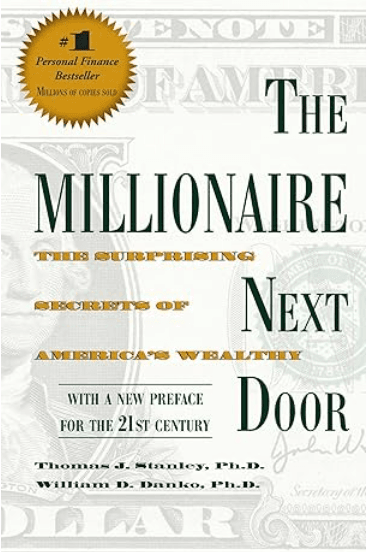
The Millionaire Next Door is not a physician-specific book and is not a new book — first published in 1996, its specific examples are dated. What makes it essential reading for physicians is the central finding: most people with high incomes are not wealthy, and most wealthy people do not have the high incomes that most people assume. The millionaire next door is a frugal small business owner who lives in a modest house and drives a used car — not a physician in a $2 million home with a leased Mercedes.
Physicians are textbook examples of what Stanley and Danko call "Under Accumulators of Wealth" — high-income professionals who spend everything they earn and never convert income into net worth. The data in our Physician Net Worth by Age guide confirms this: 1 in 4 physicians retire without $1 million despite earning $400,000 or more per year for decades. The Millionaire Next Door explains the behavioral mechanism behind that outcome with data and case studies that physician readers will recognize.
The honest caveat: The specific investment strategies mentioned in the book are dated and in some cases contradict what the evidence-based investing literature now recommends. Read it for the wealth accumulation philosophy and the spending behavior analysis — not for the investment tactics.
Bottom line: The book that most effectively challenges the physician's assumption that a high income automatically produces wealth. Read it in the first year of attending practice before the lifestyle inflation that destroys physician net worth trajectories takes hold.
Author
Bill Perkins
Amazon Rating
4.5/5 (3,000+ reviews)
Pages
243

Die with Zero is the most counterintuitive book on this list — and the one most likely to be dismissed by physicians before it is read. The premise: the goal of financial planning should be to die with as close to zero as possible, having spent your wealth on experiences and people in the years when you had the health and relationships to enjoy them — not accumulating money for a retirement that may never arrive in the form you planned.
This is not a book advocating financial recklessness. It is a book for physicians who are so focused on retirement savings that they are sacrificing experiences and relationships during the peak earning years of their 40s and 50s — the years when their children are still in the house, their parents are still alive, and their health supports the activities that diminish with age. The physician who delays every vacation, every experience, and every major expenditure until retirement is making an implicit assumption about future health and longevity that the mortality data of their own specialty should inform.
The honest caveat: Die with Zero is a philosophy book, not a financial mechanics book. Its specific recommendations — spending your wealth on experiences, dying broke — require individual calibration that physicians with dependents, uncertain retirement timelines, and significant practice ownership equity should apply carefully. It is the right antidote to excessive frugality, not a complete financial philosophy.
Bottom line: Read this book if you have maxed every retirement account, paid down significant debt, and still feel guilty about spending money on anything that is not an investment. The physician who earns $500,000 per year, saves 30 percent, and spends nothing on experiences is making a different financial mistake than the physician who saves nothing — and this book addresses that mistake directly.
The Physician Finance Reading List: What to Read and When
- Medical student or MS4: Start with The Physician Philosopher's Guide or The Physician's Guide to Personal Finance. Short, high-yield, addresses the decisions you are about to make.
- PGY-1 to PGY-3: The White Coat Investor (first book) plus The Doctor's Guide to Eliminating Debt. Get the foundational framework in place and understand your debt options before the GSI window for disability insurance closes.
- New attending (first 2 years): The White Coat Investor's Financial Boot Camp plus The Psychology of Money. The Boot Camp builds on the first WCI book and applies the framework to your specific attending situation. The Psychology of Money prevents the behavioral mistakes that destroy physician wealth before they happen.
- Established attending, 3 to 10 years out: The Little Book of Common Sense Investing, The Investor's Manifesto, and Tax-Free Wealth. This is the window when investment strategy and tax optimization matter most because income is at its peak and wealth is accumulating at the highest rate.
- Senior physician or practice owner: The White Coat Investor's Guide to Asset Protection, Die with Zero, and The Millionaire Next Door (if you have not already read it). Asset protection matters more as wealth grows. Retirement philosophy matters more as the end of peak earning years approaches.
Quick Reference: Best Book by Physician Profile
I am a medical student who has never opened a finance book: The Physician Philosopher's Guide to Personal Finance — concise, high-yield, physician-specific.
I am a resident who needs to understand my student loans now: The White Coat Investor — the foundational physician finance book every resident should read in PGY-1.
I am a new attending who just signed my first contract: The White Coat Investor's Financial Boot Camp — the 12-step follow-up that converts the framework into action.
I am struggling with lifestyle inflation and spending everything I earn: The Millionaire Next Door — the data-driven case for the frugal wealth-building approach that actually works.
I am a practice owner who has never had a serious tax conversation: Tax-Free Wealth — the tax strategy framework every practice-owning physician needs.
I panic every time the market drops: The Psychology of Money — the behavioral finance book that prevents the investment mistakes that destroy physician wealth.
I am a high-saver who feels guilty about spending anything: Die with Zero — the philosophy book that reframes the relationship between wealth and experience.
I am worried about lawsuits and want to protect my assets: The White Coat Investor's Guide to Asset Protection — the only physician finance book that covers this topic at real depth.
Frequently Asked Questions
What is the best personal finance book for physicians?
The White Coat Investor: A Doctor's Guide to Personal Finance and Investing by Dr. Jim Dahle is the most widely recommended and highest-rated physician finance book with over 2,000 Amazon reviews at 4.8 out of 5 stars. It is the physician finance book that most closely parallels what this site covers — written by an emergency physician who built the most widely read physician finance platform in the country specifically to address the financial education gap that medical training creates.
Are physician finance books worth reading if I have a financial advisor?
Yes — because your financial advisor works for you, and understanding what they are recommending is the only way to evaluate whether it is appropriate for your situation. A physician who does not understand the difference between a fee-only and a fee-based advisor, cannot evaluate whether their malpractice policy is claims-made or occurrence, or does not know what wRVU-based compensation means is a physician who cannot evaluate whether they are receiving good advice. The books on this list are not substitutes for a good financial advisor — they are prerequisites for working with one effectively.
How long does it take to read these books?
The physician-specific books on this list range from 160 to 306 pages and can be read in 4 to 8 hours each. The White Coat Investor's first book is approximately a 4-hour read. The Physician Philosopher's Guide is readable in a single long shift. Even a physician working 50-hour weeks can complete the most important books on this list within 3 to 4 months of occasional evening reading — and the financial value of having read them compresses decades of compounding into decisions made correctly from the beginning.
Is there a physician finance audiobook I can listen to on call?
The Psychology of Money is available as an audiobook and works extremely well in audio format. The White Coat Investor books are also available in audiobook form. Mechanics-heavy books with tables and figures — the Bogle and Bernstein books — are better read in print. For commuting, call prep, or workout listening, The Psychology of Money and The Millionaire Next Door are the most accessible audio experiences on this list.
Related Reading
For the complete physician financial planning framework covering all the topics these books address, see our New Attending Physician Financial Playbook.
Related reading: Physician Net Worth by Age (2026): 1 in 4 Doctors Retire Without $1 Million · How Physicians Should Invest Their First $100,000 · The Complete Physician Insurance Guide (2026) · Best Financial Advisors for Physicians (2026)
Disclosure: This article contains Amazon affiliate links. MedMoneyGuide earns a small commission when purchases are made through these links at no additional cost to you. All books were selected based on merit and usefulness for physician readers — not based on commission rates. MedMoneyGuide also earns commissions from some financial product providers featured on this site. This does not influence our editorial content.

Joshua Dunigan, DO
•Family Medicine Physician & FounderI founded MedMoneyGuide to provide physicians with the unbiased, specialty-specific financial guidance I wish I had when starting my own career. As a practicing physician, my mission is to cut through the industry noise and empower healthcare professionals to negotiate better contracts, eliminate debt, and build lasting wealth with confidence.